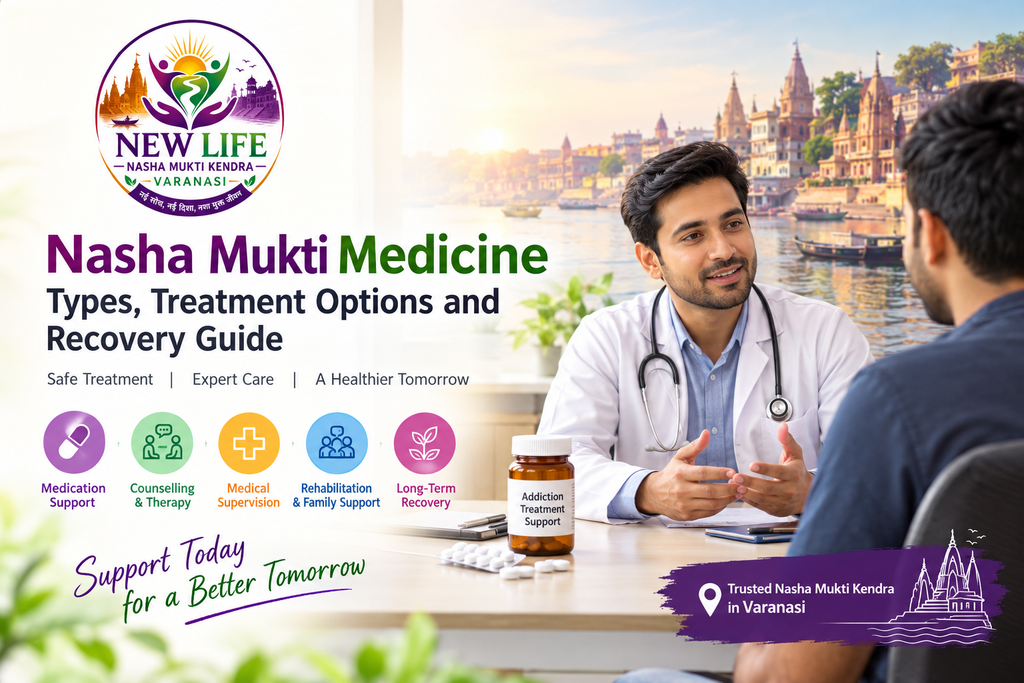
Finding the right treatment for alcohol or drug addiction can be difficult for individuals and their families. Many people search online for Nasha Mukti Medicine because they want to understand how medicines can help with addiction recovery. They may also want to know whether treatment is safe, how long recovery takes and when they should seek professional help.
The first thing to understand is that there is no single medicine that treats every type of addiction. The right treatment depends on the substance involved, the person’s health, the severity of dependence and their individual needs.
In some cases, doctors prescribe medicines to manage withdrawal symptoms, reduce cravings or support long-term recovery. Counselling, behavioural support and rehabilitation may also form part of the treatment plan.
At New Life Nasha Mukti Kendra, Varanasi, individuals and families can explore available rehabilitation support and learn about the importance of professional guidance during recovery. This guide explains the main treatment options, safety considerations and steps families can take to support a loved one.
What Is Nasha Mukti Medicine?
Nasha Mukti Medicine refers to medicines that healthcare professionals may use as part of treatment for alcohol or drug dependence. These medicines have different purposes. Some help manage withdrawal symptoms, while others may reduce cravings or support recovery from particular substance use disorders.
The choice of medicine depends on the person’s condition and requires an appropriate medical assessment. A medicine that is suitable for one person may not be suitable for another.
Doctors may consider several factors before recommending treatment, including:
- The type of substance the person uses.
- How long and how frequently they have used it.
- Their medical history and current health.
- The risk of withdrawal complications.
- Other medicines they take.
- Their mental health and recovery needs.
Nasha Mukti Treatment is not limited to taking medicines. It may also include medical monitoring, counselling, behavioural therapy, family support and follow-up care.
For more information about recovery support, read our guide on how to help someone with drug addiction.
What Types of Medicines Are Used in Addiction Treatment?
Different substances affect the body and brain in different ways. For this reason, addiction treatment requires an individual approach. A qualified healthcare professional can determine whether medication is appropriate and which treatment options may be suitable.
1. Medicines Used in Alcohol Addiction Treatment
Alcohol dependence can affect physical health, sleep, mood and daily life. Some people also experience withdrawal symptoms when they reduce or stop drinking.
Healthcare professionals may use medicines for two main purposes: managing alcohol withdrawal and supporting longer-term recovery.
Medicines such as benzodiazepines may be prescribed in supervised settings to manage alcohol withdrawal and reduce the risk of serious complications. Other prescription medicines, including naltrexone or acamprosate, may be appropriate for some people to support treatment for alcohol use disorder.
These medicines are not suitable for everyone. A doctor must assess the person’s health, other medications and treatment needs before prescribing them.
Important: People with alcohol dependence should seek medical advice before suddenly stopping alcohol use. Withdrawal can become dangerous, particularly after prolonged or heavy drinking.
For more information, read our guide to alcohol rehabilitation treatment, counselling and recovery.
2. Medicines Used in Opioid Addiction Treatment
Opioids are substances that include certain prescription pain medicines and drugs such as heroin. Opioid dependence can affect physical health, relationships and everyday responsibilities.
Evidence-based treatment may include medicines such as buprenorphine or methadone, where legally available and prescribed under appropriate medical supervision. Naltrexone may also be an option for selected patients after a suitable clinical assessment and preparation.
These medicines have specific uses and safety requirements. They should only be used under qualified medical supervision.
Treatment may also include counselling, recovery planning and support for related health or social concerns. The aim is to help the person receive appropriate care and work towards a more stable life.
3. Medicines for Withdrawal Symptoms and Related Health Needs
Some people experience sleep problems, anxiety, nausea or other symptoms during withdrawal or early recovery. Doctors may recommend appropriate treatment based on the cause and severity of these symptoms.
However, not every symptom requires medication. The healthcare professional must first determine whether the symptoms are related to withdrawal, another medical condition or a different concern.
Taking sleeping pills, sedatives or other medicines without medical advice can create additional risks. Some medicines can interact with alcohol or other substances and may cause serious harm.
4. Is There a Medicine for Every Type of Drug Addiction?
No. Treatment options differ according to the substance involved.
For example, some forms of opioid dependence have established medication-based treatment options. Treatment for other substances may focus more on behavioural therapies, counselling, management of related health conditions and continued recovery support.
A person should not assume that a medicine used for alcohol dependence will also treat another type of addiction.
The safest approach is to seek a proper assessment and follow an individual treatment plan.
How Does Nasha Mukti Treatment Work?
A well-planned addiction treatment programme looks at the person’s overall health and recovery needs. The process may include several stages.
Step 1: Initial Assessment
The healthcare team reviews the person’s substance use, medical history, symptoms and other health concerns. This assessment helps identify possible withdrawal risks and suitable treatment options.
Step 2: Medical Support and Withdrawal Management
Some people need supervised medical care when they stop using alcohol or drugs. The level of care depends on the substance, the person’s health and the risk of complications.
Withdrawal management is only one part of treatment. Completing this stage does not automatically resolve the underlying substance use disorder.
Step 3: Counselling and Behavioural Support
Counselling helps people understand the factors that influence their substance use. It can also help them develop healthier coping skills, manage triggers and improve communication with family members.
Behavioural therapies may be recommended according to the person’s needs and treatment goals.
Step 4: Rehabilitation and Recovery Planning
Rehabilitation can help people rebuild daily routines, improve their coping skills and work towards personal goals. The programme may include structured activities, counselling, family involvement and relapse-prevention planning.
The services available vary by centre, so families should confirm what a facility actually provides.
Step 5: Follow-Up Care
Recovery continues after the initial treatment period. Follow-up appointments, counselling and appropriate support can help individuals address new challenges and maintain progress.
Learn more about life after rehab and addiction recovery.
Is It Safe to Take Nasha Chhodne Ki Dawa Without a Doctor?
No. Taking Nasha Chhodne Ki Dawa without medical guidance can be risky. The wrong medicine may cause side effects, interact with other substances or fail to address the actual cause of a person’s symptoms.
Some withdrawal conditions can also become serious without appropriate medical care.
For example, alcohol withdrawal may cause severe complications, including seizures or delirium. People with alcohol dependence should consult a healthcare professional before stopping suddenly.
Seek emergency medical care if a person develops seizures, severe confusion, difficulty breathing or other serious symptoms.
For safer treatment:
- Do not use another person’s prescription medicine.
- Do not change or stop prescribed medicines without consulting the treating professional.
- Tell the doctor about alcohol, drugs, supplements and other medicines being used.
- Follow the recommended treatment and monitoring plan.
- Ask a healthcare professional about any unexpected symptoms.
You can consult the World Health Organization’s resources on mental health and substance use for further information about evidence-based care.
Can Medicine Alone Help Someone Recover From Addiction?
Medicine can play an important role in treating certain substance use disorders, but it is not the complete answer for everyone.
Addiction can affect physical health, emotional well-being, relationships, work and family life. Effective treatment may therefore need to address more than the physical effects of substance use.
Counselling and behavioural support can help people identify triggers, manage stress and develop healthier habits. Family support may also help individuals feel encouraged throughout the recovery process.
The right combination of care depends on the person’s circumstances. Some people benefit from medication alongside counselling, while others may need different forms of professional support.
Recovery also takes time. There may be challenges along the way, and a setback does not mean that further treatment cannot help.
A personalised plan, regular follow-up and access to appropriate care can support long-term progress.
How to Choose a Nasha Mukti Kendra in Varanasi
Families looking for a Nasha Mukti Kendra in Varanasi should check the quality and suitability of the available services before making a decision.
Here are some important factors to consider.
Check Medical Supervision
Ask whether qualified medical professionals assess patients and oversee medication-related treatment. If withdrawal management is needed, confirm whether the centre can provide the required level of medical care.
Understand the Treatment Programme
Ask about the available counselling, rehabilitation activities, individual treatment planning and follow-up arrangements. A suitable programme should consider the person’s needs rather than promise the same result for everyone.
Review Patient Safety and Privacy
Families should ask how the centre protects patient privacy, manages emergencies and communicates with family members. Check the facility’s credentials and relevant registrations where applicable.
Ask About Recovery Support
Find out how the centre supports patients during rehabilitation and after the initial treatment period. Continued support can be important when people return to their usual routines.
Consider New Life Nasha Mukti Kendra, Varanasi
New Life Nasha Mukti Kendra is a local option for families exploring addiction recovery and rehabilitation support in Varanasi.
Before choosing a treatment programme, contact the centre to confirm its available services, medical arrangements, admission process and patient-care facilities. The right treatment should match the individual’s clinical needs and provide access to appropriate professional care.
You can learn more about the organisation on the New Life Nasha Mukti Kendra website or visit the About Us page.
How Can Families Support Someone During Addiction Recovery?
Family support can make a meaningful difference during treatment. However, helping someone recover does not mean trying to manage the entire process without professional guidance.
Families can take practical steps to support a loved one.
- Speak with care: Discuss treatment without blaming or humiliating the person.
- Encourage professional help: Offer to help arrange an assessment or attend an appointment where appropriate.
- Learn about addiction: Understand that substance use disorders can require ongoing medical and psychological care.
- Support healthy routines: Encourage regular meals, sleep, meaningful activities and treatment attendance.
- Respect personal dignity: Protect the person’s privacy and recognise their efforts to improve.
- Stay connected with the treatment team: With the person’s consent, ask how the family can support the recovery plan.
If a loved one is experiencing severe withdrawal symptoms or another medical emergency, seek immediate medical help rather than relying on home remedies.
Frequently Asked Questions About Nasha Mukti Medicine
What is the best Nasha Mukti Medicine?
There is no single best medicine for every type of addiction. The right option depends on the substance, the person’s health and their treatment goals. A qualified healthcare professional can assess the condition and recommend suitable treatment.
Can I get Nasha Chhodne Ki Dawa without a prescription?
Some medicines used in addiction treatment require a prescription and medical supervision. Do not buy or use prescription medicines without appropriate medical advice. A professional assessment helps identify the correct treatment and reduce avoidable risks.
How long does addiction treatment take?
Treatment duration varies from person to person. It depends on the substance involved, medical needs, treatment response and recovery goals. Some people need short-term supervised care, while others benefit from ongoing treatment and follow-up support.
Can alcohol addiction be treated with medicine?
Yes. Certain prescription medicines can support treatment for alcohol use disorder, and other medicines may be used to manage withdrawal under medical supervision. The appropriate option depends on the person’s health and requires assessment by a qualified professional.
Does a Nasha Mukti Kendra provide medicine and counselling?
Services differ between centres. Some may offer access to medical assessment, medication-related care, counselling and rehabilitation, while others may provide a different range of services. Contact the facility to verify its medical arrangements and available treatment options.
Where can families find addiction treatment in Varanasi?
Families can start by consulting a qualified healthcare professional and researching local rehabilitation facilities. Check medical oversight, patient safety, treatment methods and follow-up arrangements before choosing a centre. New Life Nasha Mukti Kendra is one local option families can contact to ask about available rehabilitation support.
Key Takeaways
Nasha Mukti Medicine can be an important part of addiction treatment when a qualified healthcare professional determines that medication is appropriate. Different substances require different approaches, and no single medicine works for everyone.
Safe treatment may include medical supervision, counselling, rehabilitation and continued recovery support. Avoid self-medication and seek professional guidance, especially when withdrawal may be dangerous.
For families in Varanasi, the next step is to learn about suitable treatment options and choose care that meets the individual’s needs.
Take the First Step Towards Recovery
Addiction can affect both individuals and their families, but professional support can help them understand the available treatment options.
If you are looking for addiction recovery or rehabilitation support in Varanasi, contact New Life Nasha Mukti Kendra to ask about its services, treatment arrangements and admission process.
Visit the official website of New Life Nasha Mukti Kendra to learn more.
Pingback: Nasha Chhodne Ki Dawa: Safe Treatment in Varanasi