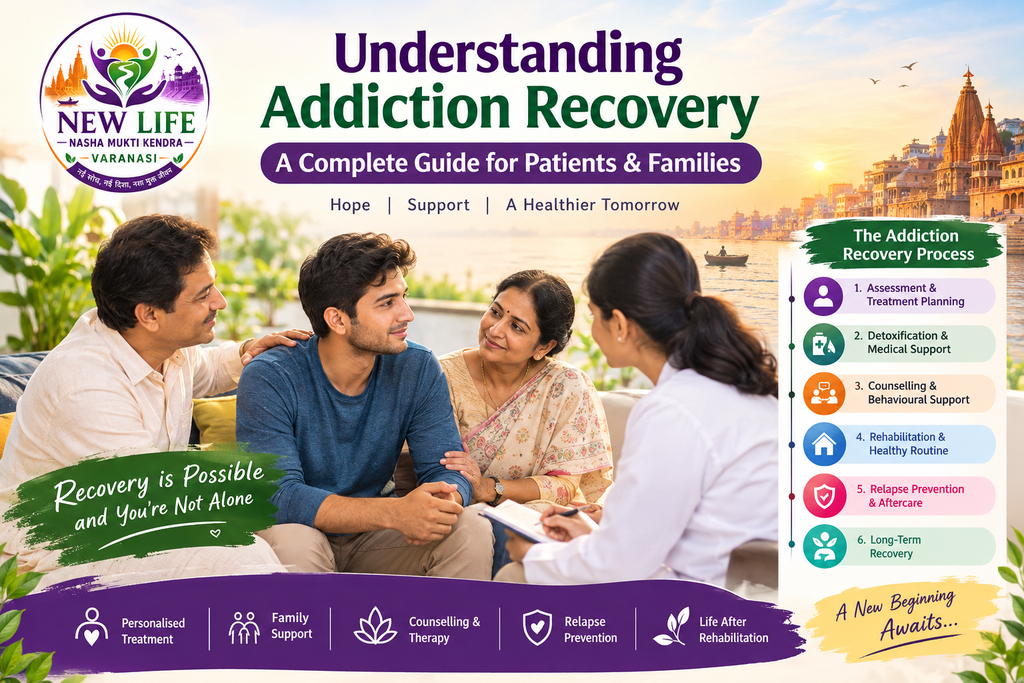
Addiction can affect much more than a person’s health. It can change family relationships, work, studies, finances and everyday life. When someone decides to leave addiction behind, the first question is often simple: What does the addiction recovery process actually involve?
Recovery is not the same for everyone. Some people may need medical support, while others may need counselling, rehabilitation, family support or long-term aftercare. The right approach depends on the person’s substance use, health, personal situation and treatment needs.
For families in Varanasi, understanding the recovery journey can make it easier to provide the right support at the right time.
What Is the Addiction Recovery Process?
The addiction recovery process is a structured journey that helps a person stop harmful substance use, understand the reasons behind it, develop healthier habits and maintain recovery over time.
Recovery may include assessment, withdrawal management, counselling, rehabilitation, family support, relapse prevention and aftercare. The exact treatment plan should be based on the individual’s needs.
The World Health Organization and UNODC recommend evidence-based and ethical approaches for the treatment of drug use disorders. Their standards cover different treatment settings, methods and interventions rather than suggesting one fixed approach for everyone. WHO and UNODC treatment standards
If you want to understand the wider treatment options available locally, you can also learn more about drug rehab centres in Varanasi.
What Are the Main Stages of Addiction Recovery?
The recovery journey can have several stages. These stages may overlap, and every person’s treatment plan can be different.
1. Recognising the Need for Help
Recovery often starts when a person recognises that substance use is affecting their life.
This may happen after problems with family, work, studies, finances or physical health. Sometimes a family member notices the changes first and encourages the person to seek help.
Accepting the need for support is an important step. A person does not have to wait until every part of life is affected before asking for professional help.
2. Assessment and Treatment Planning
The next step usually involves understanding the person’s condition and treatment needs.
A professional assessment may consider:
- Type and pattern of substance use
- Duration of substance use
- Previous treatment attempts
- Physical health
- Emotional and behavioural concerns
- Family and social environment
- Recovery goals
- Risk of relapse
This information can help the treatment team develop a suitable recovery plan.
A personalised plan is important because addiction does not affect every person in the same way.
3. Detoxification and Withdrawal Support
Some people may experience withdrawal symptoms when they stop using a substance. The symptoms and level of risk can vary depending on the substance, duration of use and individual health.
For this reason, detoxification should not be treated as a simple home remedy or a process that everyone can manage alone. Some forms of withdrawal can require medical monitoring and professional care.
WHO treatment guidance includes management of alcohol withdrawal as part of appropriate care for alcohol use disorders. WHO guidance on alcohol use disorders
Detoxification can be an important step, but it is not the complete recovery process. Long-term recovery also needs attention to behaviour, emotions, relationships, triggers and daily habits.
4. Addiction Counselling and Behavioural Support
Counselling can help a person understand the thoughts, emotions and situations connected with substance use.
During counselling, a person may work on:
- Understanding personal triggers
- Managing cravings
- Improving decision-making
- Building healthy coping skills
- Handling stress
- Improving communication
- Rebuilding confidence
- Developing healthier routines
Behavioural and psychosocial interventions are recognised components of treatment for substance use disorders. WHO and UNODC treatment standards support evidence-based treatment approaches that can be adapted to individual needs.
You can also read our guide on substance abuse recovery to understand how recovery support can continue beyond the initial treatment stage.
5. Rehabilitation and Building a Healthy Routine
Rehabilitation gives a person an opportunity to work on recovery in a structured environment.
A healthy routine can help reduce idle time and create consistency in everyday life. Depending on the treatment programme, activities may include counselling, group sessions, exercise, personal development activities, family interaction and other recovery-focused routines.
The goal is not simply to stay away from substances for a short period. The person also needs to learn how to handle everyday situations without returning to old patterns.
This is where patience becomes important. Building a new routine takes time.
6. Relapse Prevention and Aftercare
Relapse prevention is an important part of long-term recovery.
A person may face situations that increase cravings or emotional pressure after treatment. These situations can include stress, old social environments, certain people, places or difficult personal situations.
A relapse prevention plan can help a person recognise warning signs and seek support early.
WHO’s guidance on recovery-oriented services includes continuing care, case management, peer support and other recovery-focused approaches for people with drug dependence. WHO recovery-oriented services
Aftercare may include continued counselling, follow-up appointments, family support and other suitable recovery services.
How Long Does Addiction Recovery Take?
There is no single timeline that applies to every person.
The length of the addiction recovery process can depend on several factors, including:
- Type of substance used
- Duration of substance use
- Level of dependence
- Physical and emotional health
- Previous treatment history
- Family support
- Response to treatment
- Personal recovery goals
- Access to continuing support
Some people may need more intensive support, while others may gradually move towards less intensive follow-up care.
The important point is that recovery should be based on individual needs rather than an unrealistic fixed deadline.
How Does Addiction Counselling Help Recovery?
Addiction counselling gives a person a safe space to discuss problems that may be difficult to talk about with family members or friends.
Counselling can help identify patterns that contribute to substance use. It can also help a person develop healthier ways to respond to stress and difficult situations.
For example, someone may realise that stress at work, family conflict or certain social situations often lead to strong cravings. With professional support, the person can work on healthier ways to respond to those situations.
If alcohol use is the main concern, our guide on alcohol rehabilitation and counselling provides additional information about treatment and recovery support.
How Can Families Support Addiction Recovery?
Family support can make a meaningful difference during recovery. However, supporting someone with addiction does not mean controlling every part of their life.
Listen Without Constant Judgement
A person may already feel guilt, shame or fear about their addiction. Calm communication can make it easier for them to talk about their problems and ask for help.
Encourage Professional Support
Families can encourage the person to speak with qualified treatment professionals and follow an appropriate treatment plan.
Trying to handle serious addiction without professional guidance can create additional problems.
Support Healthy Daily Habits
Families can encourage regular meals, healthy routines, appointments, positive activities and supportive relationships.
Small improvements in daily life can become important parts of long-term recovery.
Understand That Recovery Takes Time
Families should not expect everything to return to normal immediately.
Recovery involves learning new habits and rebuilding trust. Both the person in recovery and their family may need patience.
Maintain Healthy Boundaries
Support does not mean accepting harmful behaviour. Families can provide care while maintaining reasonable and healthy boundaries.
Family members may also need their own emotional support during this period.
What Is Relapse Prevention?
Relapse prevention is a part of recovery that helps a person recognise situations and patterns that may increase the risk of returning to substance use and develop healthier ways to handle them.
Common areas of focus include:
- Identifying triggers
- Managing cravings
- Handling stress
- Avoiding high-risk situations
- Maintaining healthy routines
- Staying connected with support systems
- Continuing counselling where needed
- Asking for help early
A setback should not automatically be treated as proof that treatment has failed. It is important to seek professional support quickly if substance use returns or recovery becomes difficult. WHO also emphasizes treatment planning and support for relapse prevention. WHO guidance on relapse prevention
What Does Life After Addiction Treatment Look Like?
Completing a rehabilitation program is an important milestone, but recovery can continue afterwards.
Life after addiction treatment may involve returning to family responsibilities, education or work, rebuilding relationships, and maintaining healthy routines.
Some people may continue with counselling or follow-up support. Others may benefit from peer support or community-based recovery services.
The focus should be on creating a lifestyle that supports continued recovery.
You can read more about life after rehabilitation for practical information about maintaining healthy habits after treatment.
When Should a Family Consider Professional Addiction Treatment?
Families should consider professional support when substance use is repeatedly affecting a person’s health, relationships, work, education or everyday life.
Some warning signs may include:
- Repeated attempts to stop without lasting success
- Increasing dependence on alcohol or drugs
- Problems at home because of substance use
- Work or study difficulties
- Financial problems related to substance use
- Withdrawal concerns
- Strong cravings
- Social isolation
- Risky behaviour associated with substance use
Professional assessment can help families understand the situation and identify suitable treatment options.
Addiction Recovery Support in Varanasi
Families looking for addiction treatment in Varanasi should look for a centre that provides clear information about its treatment approach, counselling, rehabilitation support, family involvement and aftercare.
New Life Nasha Mukti Kendra Varanasi U.P. provides addiction recovery support for people dealing with alcohol and drug dependence. The centre focuses on counselling, rehabilitation and recovery support in a structured environment.
Families can learn more about the New Life Nasha Mukti Kendra Varanasi and explore information about available treatment services before making a decision.
Every person has different needs, so families should discuss the individual’s situation with a qualified professional before deciding on a treatment plan.
Key Takeaways
- The addiction recovery process is a journey rather than a single treatment session.
- Recovery may involve assessment, withdrawal support, counselling, rehabilitation, relapse prevention and aftercare.
- Every person’s recovery plan can be different.
- Counselling can help a person understand triggers and develop healthier coping skills.
- Family support can help create a positive recovery environment.
- Relapse prevention is an important part of long-term recovery.
- Aftercare can help a person maintain progress after formal rehabilitation.
- Families in Varanasi can seek professional support when addiction begins to affect health, relationships or daily life.
Frequently Asked Questions
What is the addiction recovery process?
The addiction recovery process is a structured approach to helping a person stop harmful substance use and build healthier habits. It may include assessment, withdrawal management, counselling, rehabilitation, relapse prevention, family support and aftercare.
What are the stages of addiction recovery?
Common stages include recognising the need for help, assessment, withdrawal support when required, counselling, rehabilitation, relapse prevention and long-term aftercare. The exact process can vary from person to person.
How long does addiction recovery take?
There is no fixed recovery timeline. Treatment duration depends on the substance involved, severity of dependence, health needs, treatment response, family support and the person’s long-term recovery plan.
Can families participate in addiction recovery?
Yes. Family members can provide emotional support, encourage professional treatment, support healthy routines and maintain positive communication. Family counselling may also be useful when relationships have been affected by addiction.
Why is relapse prevention important?
Relapse prevention helps a person recognise triggers, manage difficult situations and maintain healthy recovery habits. Continuing support can help a person respond early when recovery becomes difficult.
What happens after rehabilitation?
After rehabilitation, a person may continue with counselling, follow-up care, family support, peer support and healthy daily routines. The exact aftercare plan should match the person’s recovery needs.
Where can families in Varanasi seek addiction recovery support?
Families in Varanasi can speak with qualified treatment professionals and compare suitable rehabilitation and recovery services. New Life Nasha Mukti Kendra Varanasi provides information about addiction treatment and rehabilitation support for families seeking help.