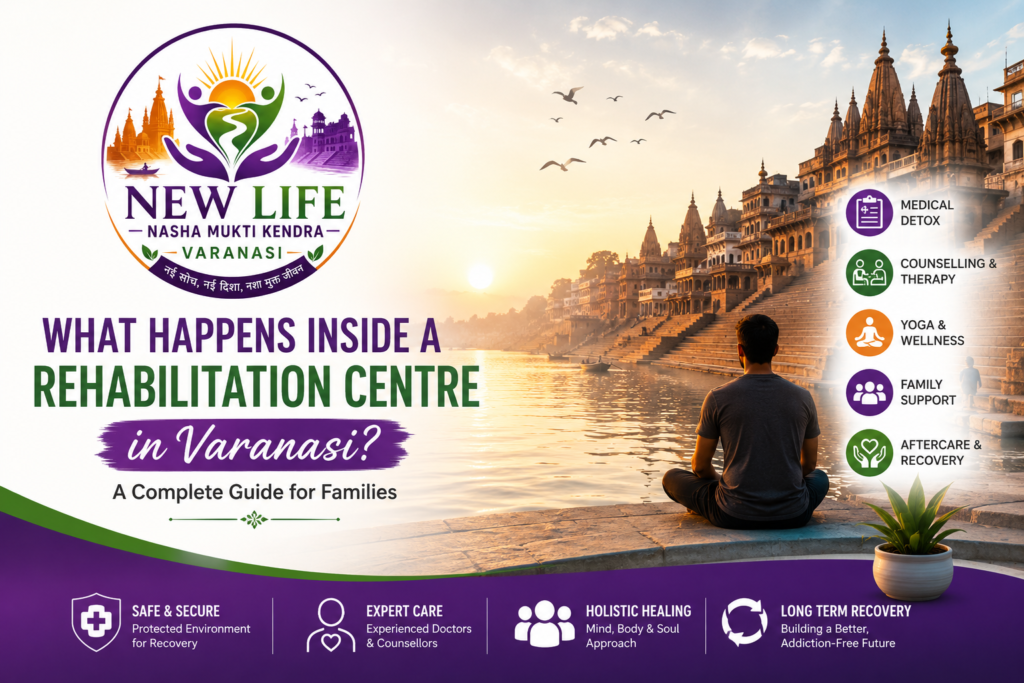
Sending a loved one to rehab feels scary because nobody really knows what happens once the doors close behind them. Families imagine locked rooms, strict rules, and a cold, hospital-like place. The truth is quite different, and it helps to know exactly what goes on inside before you make this decision.
If you searched for “rehabilitation centre in Varanasi,” you are probably trying to answer one simple question: what actually happens inside? This guide walks you through the entire journey, day by day, so you know what to expect for yourself or your family member.
Why Families in Varanasi Are Searching for Rehabilitation Centres in Varanasi
Rising Cases of Addiction in Varanasi
Addiction is no longer a hidden problem in Varanasi. More families are seeking help for alcohol and drug dependency than ever before. Young adults, working professionals, and even students are affected. This rise has pushed more people to search for reliable, professional rehabilitation support instead of relying on home remedies or willpower alone.
Common Fears Families Have Before Joining a Rehab
Most families worry about the same things. Will the treatment be painful? Will the patient be treated with dignity? Will they be allowed to stay in touch? These fears are completely normal, and a good rehabilitation centre in Varanasi addresses each one openly, right from the first phone call.
What Is a Rehabilitation Centre in Varanasi? A Simple Explanation
A rehabilitation centre is a place where people with addiction receive medical treatment, counselling, and structured support to recover safely. It is not a jail and not a punishment. It is a supervised environment built around one goal: helping a person get their life back.
How It’s Different From a Hospital
A hospital treats a medical emergency and discharges the patient once stable. A rehabilitation centre works differently. It focuses on long-term recovery through detox, therapy, lifestyle changes, and follow-up care. Patients often stay for weeks, not days, because addiction recovery needs time and consistent support.
Who Needs a Rehabilitation Centre in Varanasi?
Anyone struggling with alcohol or drug dependency, especially if they have tried quitting on their own and relapsed, benefits from a structured programme. It also helps people dealing with withdrawal symptoms that are too risky to manage at home without medical supervision.
Day 1 Inside a Rehabilitation Centre: What Actually Happens
The first day sets the tone for the entire recovery journey. Here is what typically happens on Day 1.
Admission and Initial Assessment
When a patient arrives, the team completes a detailed intake. This includes medical history, substance use history, and current physical condition. Nothing is assumed. Every case is treated individually.
Meeting the Doctor and Counsellor
Next, the patient meets a doctor for a physical check-up and a counsellor for an initial mental health assessment. This helps the team understand not just the addiction, but the person behind it.
Setting Up the Treatment Plan
Based on the assessment, the team creates a personalised treatment plan. This plan outlines the detox process, therapy schedule, and expected duration of stay. Families are usually informed of this plan too, so everyone knows what lies ahead.
The Detox Process Explained
Detox is often the part families worry about the most. Here is what it really involves.
Detox is the medically supervised process of removing harmful substances from the body while managing withdrawal symptoms safely.
How Withdrawal Is Managed Safely
Withdrawal symptoms vary depending on the substance and how long someone has been using it. A medical team monitors vital signs closely and steps in immediately if symptoms become severe. This supervision is exactly why detox at home is risky, while detox at a centre is safe.
How Long Detox Usually Takes
Detox usually takes between 5 and 10 days, depending on the substance involved and the severity of dependency. Some cases take longer, and the medical team adjusts the timeline based on how the patient responds.
What Medicines Are Typically Used (General Overview)
Doctors may use medication to ease withdrawal symptoms like anxiety, nausea, or sleep disturbance. The exact medicines depend entirely on the individual case and are prescribed only after proper evaluation.
Daily Routine Inside a Nasha Mukti Kendra
Once detox is complete, patients follow a structured daily routine. Structure plays a big role in recovery because it replaces old habits with healthy new ones.
Morning Routine — Yoga, Meditation, and Exercise
Most days start early with light exercise, yoga, or meditation. This helps calm the mind, improve sleep quality, and rebuild physical strength that addiction often weakens.
Counselling and Therapy Sessions
Mid-morning is usually reserved for one-on-one counselling. This is where the real emotional work happens, helping patients understand the root causes behind their addiction.
Group Discussions and Peer Support
Afternoons often include group sessions where patients share experiences with others going through similar struggles. This peer support reduces isolation and builds accountability.
Evening Activities and Rest
Evenings are kept lighter, with recreational activities, reading, or reflection time, followed by an early, disciplined bedtime. Good sleep is a big part of physical recovery.
Types of Therapy Used Inside Rehab Centres
Individual Counselling
One-on-one sessions with a trained counsellor help patients work through personal triggers, past trauma, and emotional patterns that fuel addiction.
Group Therapy
Group sessions build a sense of community. Hearing someone else’s story often helps a patient feel less alone in their own struggle.
Family Therapy Sessions
Addiction affects the whole family, not just the individual. Family therapy helps rebuild trust and teaches relatives how to support recovery without enabling old habits.
Cognitive Behavioural Therapy (CBT) — Simple Explanation
CBT is a therapy method that helps patients identify negative thought patterns and replace them with healthier ways of thinking and reacting. It is one of the most effective tools used in modern addiction treatment.
How Family Involvement Works During Treatment
Family Counselling Sessions
Most centres schedule regular sessions where family members can speak with counsellors, understand the patient’s progress, and learn how to support recovery at home.
Visiting Rules and Communication
Visiting policies vary by centre and by treatment phase. Early in treatment, contact may be limited to help the patient focus. As recovery progresses, visits and calls usually increase.
Preparing Family for Aftercare
Before discharge, families are guided on what to expect once the patient returns home, including warning signs of relapse and how to respond calmly and supportively.
How Long Does Rehabilitation Take?
Short-Term vs Long-Term Programmes
Short-term programmes typically run for 21 to 30 days and suit milder cases. Long-term programmes can extend to 60 or 90 days for patients with severe or long-standing dependency.
Factors That Affect Recovery Time
Recovery time depends on the substance used, duration of addiction, presence of any co-occurring mental health condition, and how the patient responds to treatment.
Life After Rehab: The Aftercare Process
Recovery does not end on the day of discharge. What happens after rehab often decides whether recovery lasts.
Relapse Prevention Plan
Before leaving, patients receive a personalised plan covering triggers to avoid, coping strategies, and emergency contacts in case of a crisis.
Follow-Up Counselling
Regular follow-up sessions, whether weekly or monthly, help patients stay accountable and address any struggles early, before they turn into a relapse.
Support Groups After Discharge
Ongoing support groups give patients a safe space to stay connected with their recovery community long after they leave the centre.
What Makes a Good Rehabilitation Centre in Varanasi?
Qualified Doctors and Counsellors
Look for a centre with licensed medical staff and trained addiction counsellors, not just general caretakers.
Clean and Safe Environment
A good centre maintains hygiene, safety protocols, and a calm environment that supports healing rather than adding stress.
Transparent Treatment Process
The centre should clearly explain the treatment plan, costs, and expected duration upfront, without hidden surprises along the way.
Why Choose New Life Nasha Mukti Kendra Varanasi
Our Approach to Recovery
At New Life Nasha Mukti Kendra Varanasi, we treat every patient as an individual, not a case number. Our approach combines medical detox, personalised counselling, and family involvement to build recovery that actually lasts.
Facilities We Offer
We provide medically supervised detox, individual and group therapy, yoga and wellness sessions, family counselling, and a structured aftercare programme designed to support patients well beyond their stay with us.
Frequently Asked Questions
What happens on the first day at a rehabilitation centre in Varanasi?
On the first day, the patient goes through a medical assessment, meets a doctor and counsellor, and receives a personalised treatment plan based on their specific needs and history.
How long does treatment at a nasha mukti kendra take?
Treatment usually ranges from 21 to 90 days, depending on the severity of addiction and how the patient responds to the recovery process.
Is family allowed to meet patients during treatment?
Yes, most centres allow family visits, though timing and frequency depend on the treatment phase. Early recovery may have limited contact, which usually increases as treatment progresses.
Does rehab treatment hurt or feel like punishment?
No. Modern rehabilitation focuses on medical care, therapy, and support, not punishment. Detox is managed carefully to keep the patient as comfortable as possible.
What is the cost of rehabilitation in Varanasi?
Costs vary based on the type of programme, duration of stay, and level of medical care required. Contact our team directly for a clear, transparent cost estimate for your specific case.
Can a person recover completely from addiction?
Yes, full recovery is possible with the right treatment, consistent aftercare, and family support. Many patients go on to lead healthy, addiction-free lives after completing a structured programme.